Hair Loss After Delivery: Why It Happens
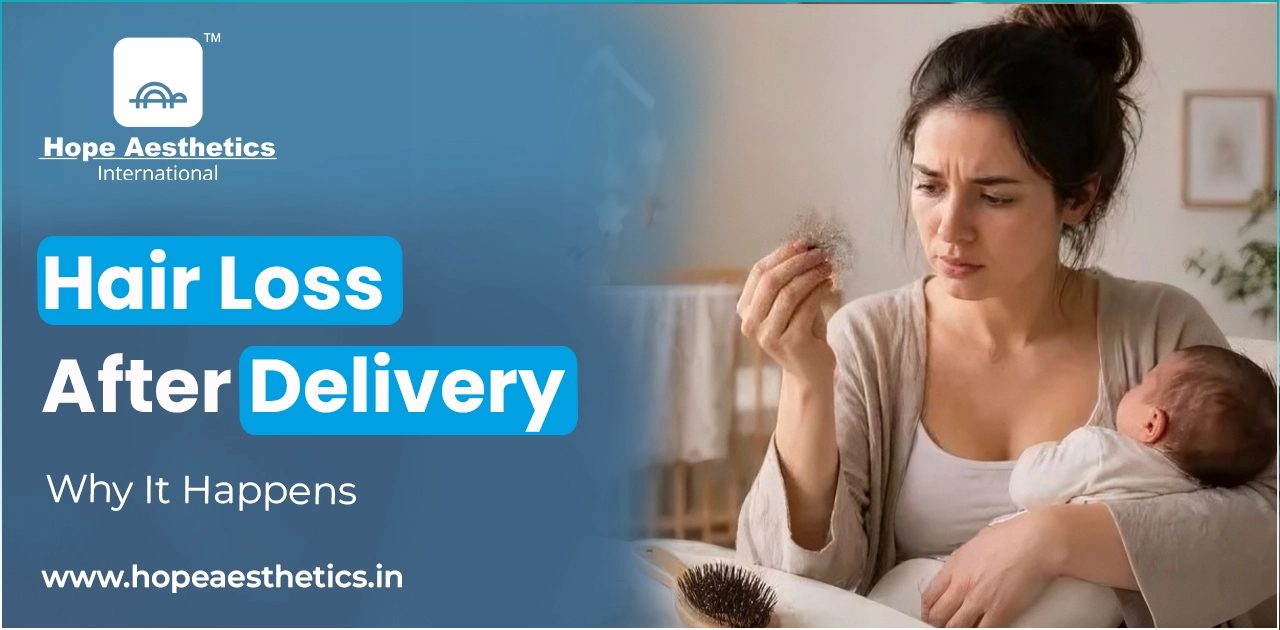
Many women experience noticeable hair fall a few weeks to months after delivery. Thick, healthy hair during pregnancy suddenly starts shedding, causing anxiety.
This condition is common and usually temporary, but understanding why it happens is important to manage it correctly.
Hair loss after childbirth is mainly due to hormonal changes, physical stress, and nutritional depletion.
1. Sudden Drop in Estrogen Levels
During pregnancy, estrogen levels are high. This keeps hair in the growth phase for longer, making hair look thicker.
After delivery, estrogen levels drop sharply.
This causes many hair follicles to shift into the shedding phase at the same time, leading to Telogen Effluvium.
How Folligenix Helps
- Micro-Needling with GFC / EXOS-GFC stimulates growth signals and helps follicles return to the growth phase
- supports stabilization of the hair cycle after hormonal shifts
2. Physical Stress of Delivery
Childbirth is a major physical event.
The body undergoes:
- blood loss
- hormonal fluctuations
- energy depletion
This stress pushes hair follicles into the resting phase.
How Folligenix Helps
- Photo-Bio Therapy improves cellular energy and helps follicles recover from physiological stress
- enhances mitochondrial activity and follicle metabolism
3. Nutritional Deficiencies
During pregnancy and breastfeeding, the body prioritizes nutrients for the baby.
This often leads to deficiencies in:
- iron
- protein
- calcium
- vitamins
Hair follicles receive fewer nutrients, leading to increased shedding.
How Folligenix Helps
- Regional diet planning ensures proper nutrient intake
- Micro-Nutrition (seed and nut blend) provides essential nutrients like protein, zinc, omega-3, and vitamins
This supports hair regrowth.
4. Sleep Deprivation
New mothers often experience:
- interrupted sleep
- fatigue
- irregular routines
Poor sleep affects hormone balance and reduces the body’s ability to repair itself.
How Folligenix Helps
- improves follicular recovery through regenerative stimulation
- supports cellular repair processes
This helps follicles maintain healthier growth cycles.
5. Increased Stress and Emotional Changes
Postpartum period can bring emotional stress due to:
- lifestyle changes
- responsibility of newborn
- hormonal fluctuations
Stress can worsen hair shedding and delay recovery.
How Folligenix Helps
- improves follicular environment through regenerative therapies
- supports recovery from stress-induced hair cycle disruption
Related Read: Is Stress Causing Your Hair Loss?
6. Reduced Blood Circulation and Recovery
After delivery, the body is in recovery mode.
Circulation and nutrient distribution may not be optimal, affecting hair follicles.
How Folligenix Helps
- Photo-Bio Therapy improves microcirculation
- Micro-Needling stimulates new blood vessel formation
This enhances oxygen and nutrient delivery to follicles.
The Important Reality
Hair loss after childbirth is usually temporary.
It is caused by multiple factors working together:
- hormonal changes
- physical stress
- nutritional deficiency
- sleep disruption
Hair shedding often peaks around 2–4 months after delivery.
The Good News
In most cases, hair follicles are still alive.
This means hair can grow back once the body stabilizes.
The Folligenix™ Protocol supports recovery by improving:
- cellular energy
- blood circulation
- regenerative signalling
- nutritional balance
This helps speed up recovery and improve hair quality.
Final Thought
Hair loss after childbirth is not permanent for most women.
It is a natural response of the body adjusting after pregnancy.
With the right support, hair can return to its normal strength and density over time.