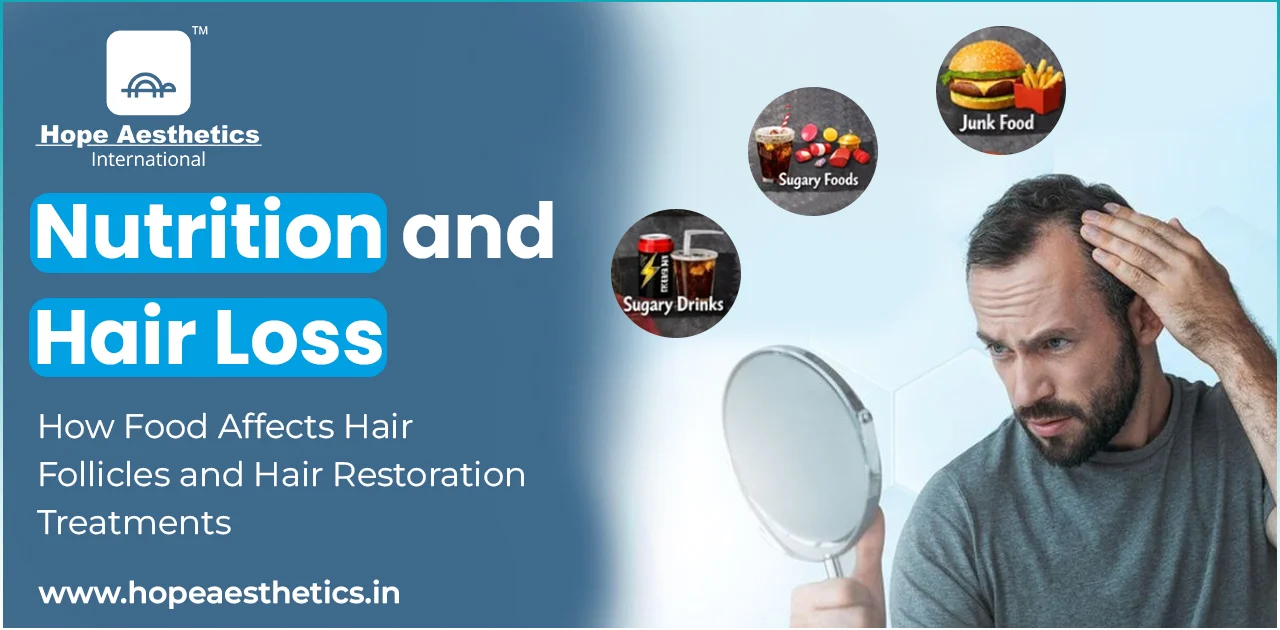
Nutrition and Hair Loss: How Food Affects Hair Follicles and Hair Restoration Treatments
And Why It Matters for Treatments Like Micro-Needling
Hair growth is not just a scalp issue.
It depends on:
- Blood supply
- Micronutrient availability
- Inflammation levels
- Hormonal balance
- Collagen production
- Wound healing efficiency
Micro-needling stimulates hair by creating controlled micro-injury.
But the scalp can only regenerate properly if the body has the raw materials.
This is where regional diet becomes clinically relevant.
Hair Follicles Are Nutrient-Sensitive Organs
Hair follicles are among the most metabolically active structures in the body.
They require:
- Iron
- Zinc
- B-vitamins
- Protein
- Essential fatty acids
- Vitamin D
- Copper
- Selenium
Now here’s the problem:
Deficiency does not always mean low intake.
Often it means poor absorption.
If your gut is inflamed or poorly adapted to your diet, absorption drops.
That directly weakens:
- Hair shaft thickness
- Growth phase duration
- Follicle strength
Related Read: Why Hair Loss Happens
Regional Diet and Iron Absorption (Critical for Hair)
Iron deficiency is one of the most common hidden causes of hair thinning.
Plant-based regional diets often contain iron – but also phytates.
Traditional preparation methods like:
- Soaking
- Fermentation
- Sprouting
- Adding lemon (Vitamin C)
Increase iron absorption significantly.
If someone modernizes their diet but removes:
- Fermentation
- Spice combinations
- Traditional pairings
Iron absorption drops – even if iron intake appears adequate.
Micro-needling stimulates follicles, but if iron delivery is weak, regrowth is compromised.
Gut Microbiome and Inflammation Control
Micro-needling works by:
- Creating micro-channels
- Stimulating growth factors
- Increasing blood flow
- Triggering collagen remodeling
But if systemic inflammation is high, healing slows.
Regional high-fiber diets support:
- Short-chain fatty acid production
- Gut barrier integrity
- Reduced inflammatory markers
Western ultra-processed diets increase:
- Endotoxins
- Gut permeability
- Chronic low-grade inflammation
Inflammation directly interferes with:
- Follicle cycling
- Growth factor signaling
- Stem cell activation
So diet affects treatment response.
Protein Quality and Amino Acid Availability
Hair is made of keratin (protein).
Regional combinations like:
- Rice + lentils
- Millet + legumes
Create complete amino acid profiles.
If someone shifts to:
- Low-protein diet
- Poorly balanced vegetarian pattern
- High processed carbs
Hair becomes thinner over time.
Micro-needling stimulates follicles – but protein builds the structure.
Without adequate amino acids:
- Hair density won’t improve optimally
- Results plateau
Micronutrients Required for Micro-Needling Recovery
Micro-needling is controlled wound healing.
Wound healing requires:
- Vitamin C → Collagen formation
- Zinc → Cell division
- Copper → Collagen cross-linking
- Iron → Oxygen delivery
- Omega-3 → Inflammation regulation
- B-complex → Cellular energy
Traditional regional diets that include:
- Seasonal vegetables
- Spices
- Seeds
- Fermented foods
Support these processes naturally.
Modern processed diets reduce these micronutrients while increasing inflammation.
That slows post-procedure recovery.
Traditional Spices and Hair Biology
Spices are not flavor agents. They are bioactive compounds.
Examples:
Turmeric → anti-inflammatory
Black pepper → improves nutrient absorption
Fenugreek → metabolic regulation
Ginger → improves circulation
These compounds support:
- Blood flow
- Reduced oxidative stress
- Improved micronutrient uptake
Hair follicles are highly sensitive to oxidative damage.
Chronic oxidative stress shrinks follicles over time.
Regional spice usage indirectly protects follicle environment.
Related Read: What Are The Early Signs of Balding?
Seasonal Eating and Hair Cycle
Hair has growth (anagen), transition, and shedding (telogen) phases.
Seasonal diets affect:
- Vitamin D levels
- Fat intake
- Antioxidant intake
- Immune regulation
Ignoring seasonality can disrupt hormonal balance.
For example:
Low winter sunlight + poor fat intake → low Vitamin D → increased shedding risk.
Traditional seasonal eating patterns naturally compensate for these changes.
Why Some Patients Don’t Respond Well to Micro-Needling
Common reasons:
- Low ferritin (iron stores)
- Low Vitamin D
- Poor protein intake
- Gut inflammation
- Poor micronutrient absorption
- High oxidative stress
Procedure is correct.
Biology is weak.
You cannot stimulate a follicle into growth if the body lacks raw material.
Practical Integration for Patients (India Context)
For better hair treatment outcomes:
Maintain:
- Fermented foods
- Curd/buttermilk (if tolerated)
- Soaked/sprouted lentils
- Lemon with iron-rich meals
- Seasonal vegetables
- Seeds (pumpkin, sesame, flax)
- Balanced protein intake
Avoid:
- Ultra-processed snacks
- Excess sugar
- Refined seed oils
- Sudden extreme diet shifts
Hair therapy + gut stability + micronutrient sufficiency = better results.
Final Conclusion
Micro-needling activates the scalp.
Regional diet determines whether the body can respond.
Hair regeneration requires:
- Proper absorption
- Controlled inflammation
- Strong wound healing
- Stable metabolism
If digestion is compromised, treatment response declines.
Hair growth is not only about what we do to the scalp.
It is about what the body can deliver to the follicle.
References
“Fermentation increases mineral absorption” – backed by Marco et al. 2017 (Frontiers)
“Diet shapes your gut bacteria in ways that affect nutrient availability” – David et al. 2014 (Nature)
“Iron and zinc are critical for hair growth and healing” – Almohanna et al. 2019 (Dermatology & Therapy)
“Inflammation and gut health influence healing after micro-needling” – Cani et al. 2008 (Diabetes) and Calder et al. 2011
Contact Hope Aesthetics Clinic today to book your consultation.