Is Stress Causing Your Hair Loss?
Emotional stress is one of the most common yet overlooked causes of hair fall. Many people notice increased shedding during stressful phases, but fail to connect the two.
Hair follicles are highly sensitive to internal signals. When the body is under stress, it shifts focus toward survival, and hair growth becomes a low priority.
1. Stress Pushes Hair into Shedding Phase
Hair grows in cycles:
- growth phase (anagen)
- resting/shedding phase (telogen)
Emotional stress increases cortisol levels, which pushes a large number of follicles into the shedding phase at the same time.
This leads to Telogen Effluvium, usually seen 2–3 months after the stressful event.
How Folligenix Helps
- Photo-Bio Therapy improves cellular energy and helps follicles recover from stress
- Micro-Needling with GFC / EXOS-GFC activates regenerative signals and helps follicles return to the growth phase
2. Reduced Blood Flow to the Scalp
Stress activates the “fight or flight” response.
In this state:
- blood flow shifts toward vital organs
- scalp circulation reduces
- nutrient and oxygen delivery drops
This weakens follicle activity.
How Folligenix Helps
- Photo-Bio Therapy improves microcirculation through nitric oxide release
- Micro-Needling stimulates new blood vessel formation
This restores blood supply to follicles.
3. Hormonal Imbalance
Chronic stress affects multiple hormones:
- increases cortisol
- disrupts thyroid balance
- affects androgen levels
This can worsen Androgenetic Alopecia and accelerate thinning.
How Folligenix Helps
Folligenix improves follicular signalling and environment, helping follicles remain stable despite hormonal fluctuations.
Regenerative therapies support dermal papilla function and slow down miniaturization.
Related Read: Folligenix™ Protocol – A Smarter Way to Protect and Activate Your Hair
4. Increased Inflammation and Oxidative Stress
Stress increases inflammation in the body.
This leads to:
- oxidative damage to follicle cells
- unhealthy scalp environment
- gradual follicle weakening
How Folligenix Helps
- regenerative stimulation through micro-needling supports tissue repair
- improved circulation and nutrition help reduce inflammation
This creates a healthier environment for hair growth.
5. Poor Lifestyle Habits During Stress
Stress often leads to:
- poor sleep
- irregular meals
- low protein intake
- reduced physical activity
These factors reduce nutrient supply and weaken follicle function.
How Folligenix Helps
- Regional diet planning ensures proper nutrient intake
- Micro-nutrition with seed and nut blend provides essential nutrients
- Exercise recommendations improve circulation and metabolism
6. Reduced Cellular Energy
Chronic stress affects mitochondrial function, reducing energy production in cells.
Hair follicles need high energy for growth. When energy drops:
- growth slows
- hair becomes thinner
- shedding increases
How Folligenix Helps
Photo-Bio Therapy improves mitochondrial activity and ATP production, helping follicles regain energy and function more effectively.
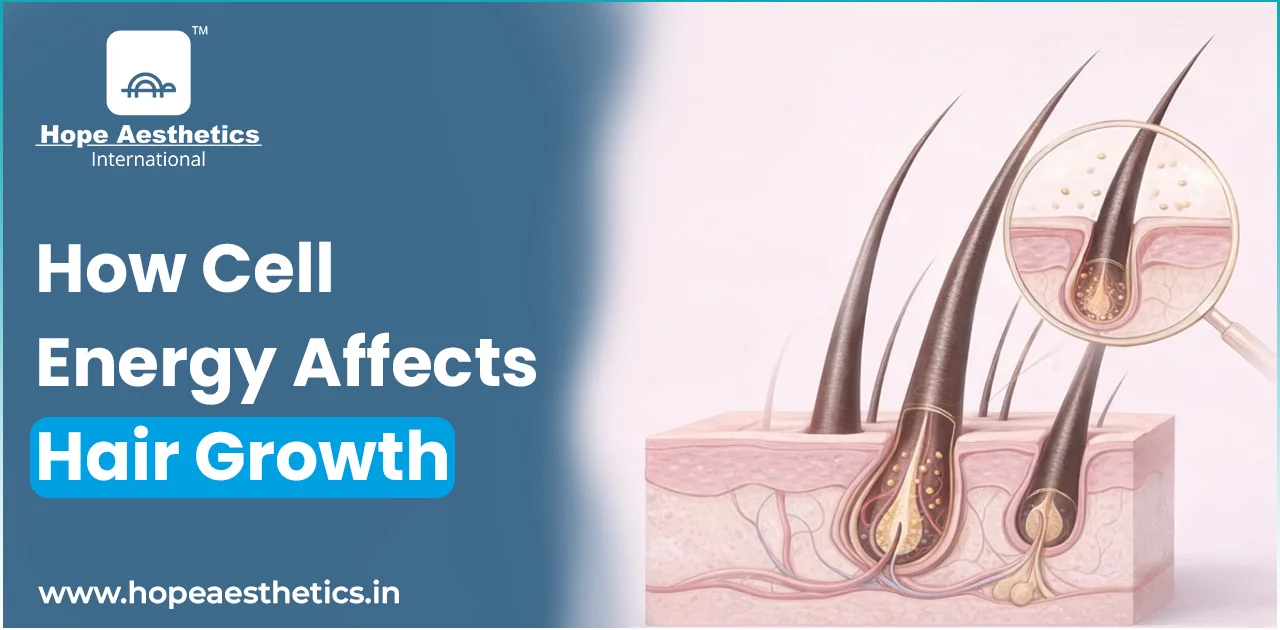
Related Read: How Cell Energy Affects Hair Growth
The Important Reality
Stress-related hair loss is not immediate. It is delayed and often misunderstood.
By the time you notice hair fall, the trigger may have happened months earlier.
Hair loss in such cases is usually due to multiple systems being affected at the same time:
- hormones
- circulation
- nutrition
- cellular energy
The Good News
In most cases, stress-related hair loss is reversible.
Hair follicles are usually still alive – just temporarily weakened.
The Folligenix™ Protocol focuses on restoring:
- cellular energy
- blood circulation
- regenerative signalling
- nutritional balance
By improving these systems together, it helps follicles recover and return to healthier growth cycles.
Final Thought
Hair loss is not just a scalp problem. It is often a signal that your body is under pressure.
If stress is affecting your life, it will eventually affect your hair.
Fix the internal imbalance, and your hair often starts recovering with it.