Can Bone Fracture Cause Hair Loss?
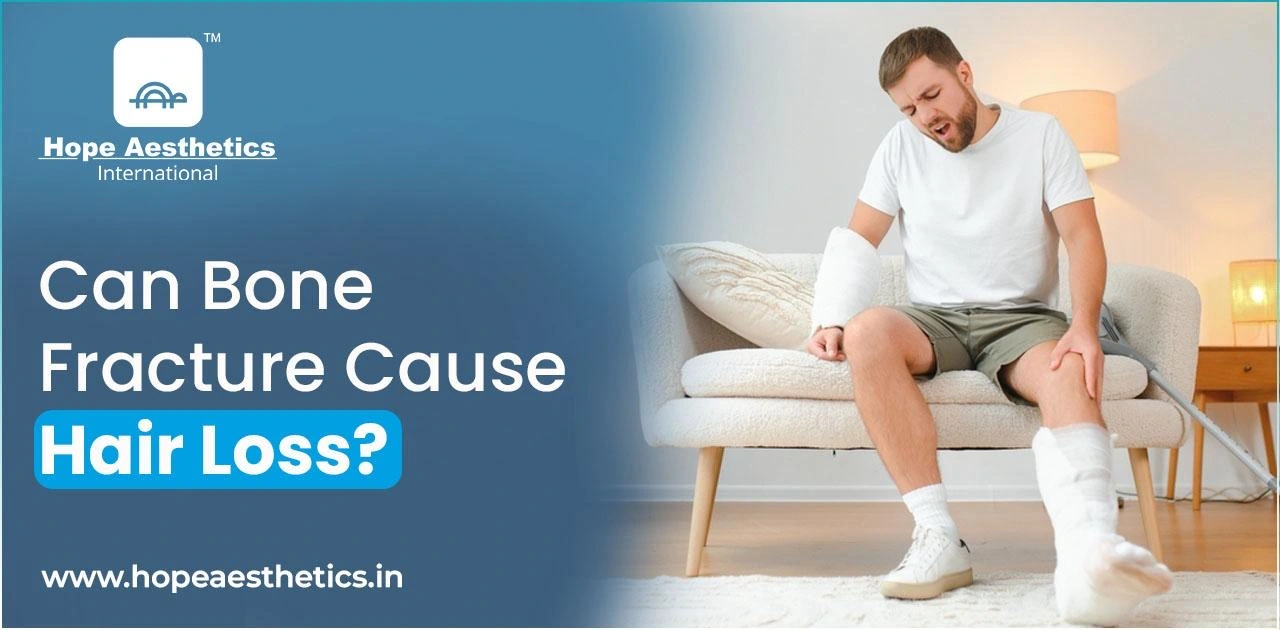
Many people notice unexpected hair fall a few weeks or months after a bone fracture or surgery. It feels unrelated – the injury was in the bone, so why is the hair falling?
The truth is, a fracture is not just a local injury. It triggers system-wide stress, inflammation, and metabolic changes that can affect hair follicles.
Hair loss in such cases is usually temporary, but understanding the reason is important to manage it correctly.
1. Physical Trauma Pushes Hair Into Shedding Phase
A bone fracture is a major physical stress event.
The body responds by diverting energy toward healing the bone. Hair growth becomes a low priority.
This pushes many hair follicles into the shedding phase, causing Telogen Effluvium.
Hair fall usually starts 6–12 weeks after the injury, which makes it confusing for patients.
How Folligenix Helps
- Photo-Bio Therapy improves cellular energy and helps follicles recover from physical stress
- Micro-Needling with GFC / EXOS-GFC stimulates regenerative signalling and helps follicles return to the growth phase
2. Increased Inflammation in the Body
Fractures trigger inflammation as part of the healing process.
While necessary for bone repair, this inflammation can:
- increase oxidative stress
- affect hair follicle cells
- disturb hair growth cycles
How Folligenix Helps
- regenerative stimulation through Micro-Needling supports tissue repair
- improved circulation and nutrition help reduce inflammatory impact on follicles
3. Nutrient Diversion for Bone Healing
Bone healing requires nutrients like:
- calcium
- protein
- vitamin D
- magnesium
The body prioritizes these nutrients for bone repair, leaving less available for hair.
This leads to temporary nutrient deficiency for hair follicles.
How Folligenix Helps
- Regional Diet Planning ensures adequate intake of essential nutrients
- Micro-Nutrition with Seed and Nut blend provides protein, minerals, and essential fatty acids
This helps support both bone and hair recovery.
4. Reduced Physical Activity and Circulation
After a fracture, movement is often restricted.
Reduced activity leads to:
- poor blood circulation
- reduced oxygen delivery
- slower metabolism
Hair follicles depend on blood flow, so reduced circulation weakens their function.
How Folligenix Helps
- Photo-Bio Therapy improves microcirculation
- Micro-Needling stimulates new blood vessel formation
This helps restore nutrient and oxygen supply to follicles.
5. Stress and Emotional Impact
Injury and recovery can cause emotional stress due to:
- pain
- limited mobility
- lifestyle disruption
Stress can worsen hair fall and delay recovery.
How Folligenix Helps
The protocol supports recovery by:
- improving cellular metabolism
- stabilizing follicular environment
- enhancing regenerative signalling
Related Read: Is Stress Causing Your Hair Loss?
6. Medication Effects
Painkillers, antibiotics, and other medications used after fractures can sometimes affect metabolism and nutrient absorption.
This may indirectly contribute to hair thinning.
How Folligenix Helps
- nutritional support ensures adequate micronutrient availability
- improved follicular environment helps reduce the impact of metabolic changes
The Important Reality
Hair loss after a bone fracture is usually temporary.
It is caused by a combination of:
- physical stress
- inflammation
- nutrient diversion
- reduced circulation
Hair shedding typically appears weeks after the injury, not immediately.
Related Read: Hair Loss Treatments – Solutions for Hair Regrowth in Pune
The Good News
In most cases, hair follicles are still alive.
Once the body recovers, hair growth usually resumes.
The Folligenix™ Protocol helps speed up this recovery by improving:
- cellular energy
- blood circulation
- regenerative signalling
- nutritional support
This creates a better environment for follicles to recover faster.
Final Thought
Hair loss after a fracture is your body’s response to stress and healing.
It is not permanent in most cases.
With proper care and support, hair can return to its normal growth cycle once the body stabilizes.