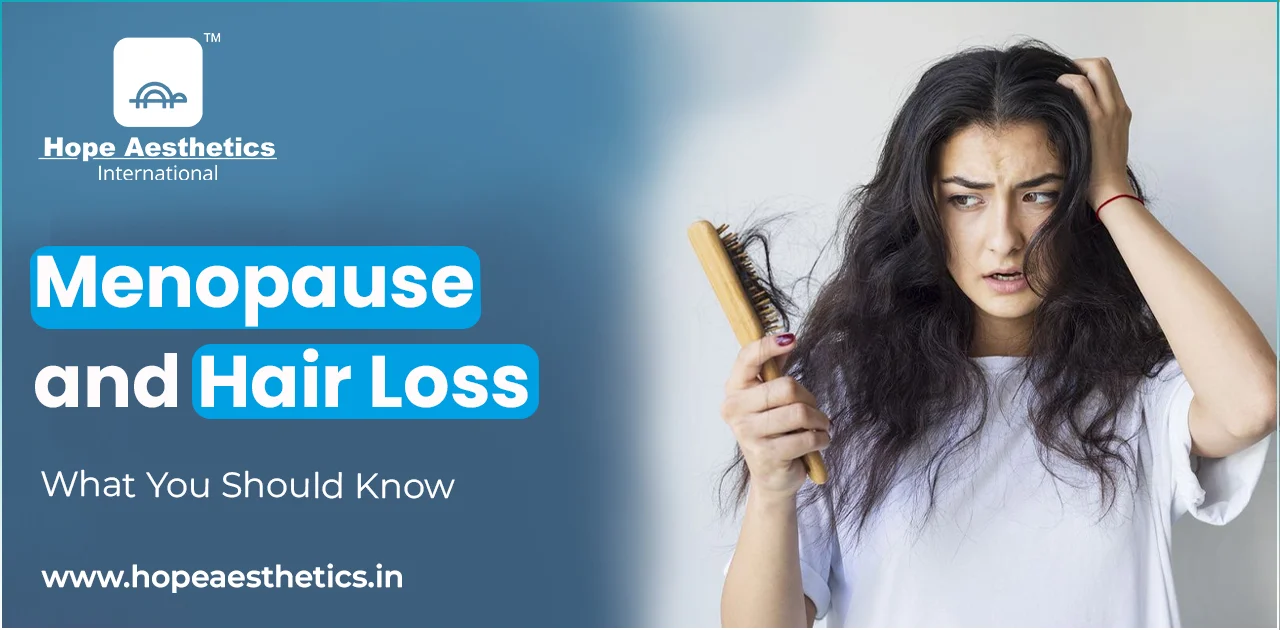
Menopause and Hair Loss: What You Should Know
Many women notice increased hair fall, thinning, or reduced volume after menopause. This can be unexpected and stressful, especially when hair was stable for years before.
Menopause is not just about periods stopping. It brings major hormonal and metabolic changes, and hair follicles are very sensitive to these shifts.
The result is gradual thinning, especially on the top of the scalp.
1. Drop in Estrogen Levels
Estrogen helps keep hair in the growth phase for longer.
After menopause, estrogen levels fall significantly. This leads to:
- shorter hair growth cycles
- increased shedding
- thinner hair strands
Hair starts growing slower and falling faster.
How Folligenix Helps
Micro-Needling with GFC / EXOS-GFC stimulates growth factors that support follicle activity and help maintain stronger growth cycles.
This helps compensate for reduced hormonal support.
2. Increased Effect of Androgens (Male Hormones)
After menopause, the balance between estrogen and androgens changes.
Even normal levels of androgens can start affecting hair follicles more strongly, leading to a pattern similar to Androgenetic Alopecia.
This causes:
- thinning on the top of the scalp
- widening of the hair part
- reduced density
How Folligenix Helps
Folligenix focuses on:
- improving follicular environment
- strengthening dermal papilla function
- slowing miniaturization through regenerative stimulation
3. Reduced Blood Circulation
With age, blood flow to the scalp may reduce.
Hair follicles depend on circulation to receive:
- oxygen
- nutrients
- growth signals
Reduced circulation weakens follicle performance.
How Folligenix Helps
- Photo-Bio Therapy improves microcirculation
- Micro-Needling promotes new blood vessel formation
This enhances nutrient delivery to follicles.
4. Nutritional Deficiencies
After menopause, nutritional needs change. Many women develop deficiencies in:
- iron
- protein
- vitamin D
- calcium
- essential fatty acids
These deficiencies directly affect hair growth.
How Folligenix Helps
The protocol includes:
- Regional Diet Planning
- Micro-Nutrition through Seed and Nut Blends
These provide essential nutrients required for healthy hair production.
Related Read: Nutrition and Hair Loss: How Food Affects Hair Follicles and Hair Restoration Treatments
5. Slower Cellular Regeneration
As the body ages, cell turnover slows down.
Hair follicles take longer to repair and regenerate, leading to:
- slower hair growth
- weaker strands
- reduced density
How Folligenix Helps
Photo-Bio Therapy improves cellular energy and supports faster cell activity.
Micro-Needling activates regenerative pathways that enhance follicle repair.
Related Read: How Cell Energy Affects Hair Growth
6. Increased Stress and Sleep Disturbance
Menopause is often associated with:
- sleep disturbances
- mood changes
- increased stress
These factors can trigger Telogen Effluvium.
How Folligenix Helps
The protocol supports recovery through:
- improved cellular metabolism
- better follicular signalling
- enhanced scalp environment
This helps stabilize the hair cycle.
Related Read: Sleep and Hair Loss: What’s the Connection?
The Important Reality
Hair loss after menopause is very common and usually happens due to multiple factors acting together:
- hormonal changes
- reduced circulation
- nutritional deficiencies
- slower regeneration
- stress
It is not a single-cause problem, which is why simple solutions often don’t work.
The Good News
In many cases, hair follicles are still alive but weakened.
This means there is an opportunity to support and strengthen them.
The Folligenix™ Protocol focuses on improving:
- blood supply
- cellular energy
- regenerative signalling
- nutritional support
By addressing these systems together, it helps improve the follicular environment and slow down further thinning.
Final Thought
Hair loss after menopause is not just about age – it is about how the body changes internally.
Understanding these changes is the first step.
Supporting your body the right way can help maintain healthier, stronger hair even after menopause.