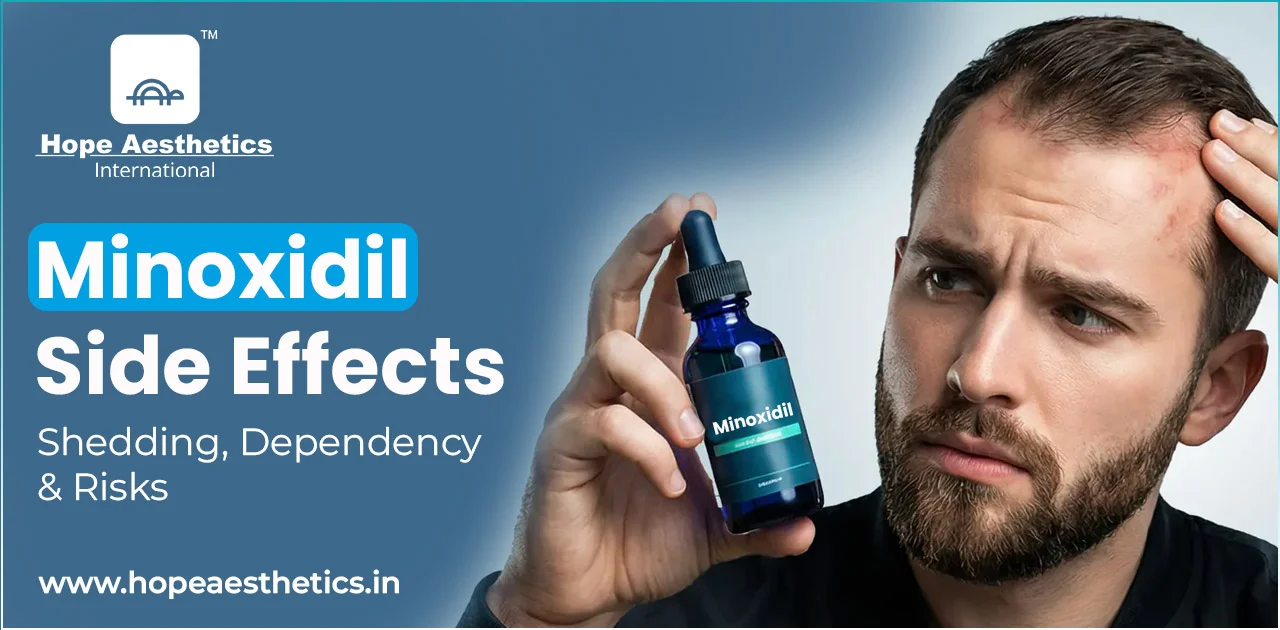
Minoxidil Side Effects: Shedding, Dependency & Risks
Minoxidil: What It Does, What It Doesn’t, and the Side-Effects You Should Actually Know About
Minoxidil is one of the most commonly used treatments for hair loss in men and women. It is available as a liquid, foam, or solution that you apply directly on the scalp. Many people start using it without fully understanding how it works or what it can do to their body. This article explains minoxidil in very simple terms no medical jargon, no exaggeration, and no marketing language.
What is Minoxidil?
Minoxidil was not originally made for hair loss. It was first used as a medicine to treat high blood pressure. Doctors noticed that people taking it were developing excess hair growth on the body and scalp. Later, it was repurposed as a topical treatment for hair loss.
When applied to the scalp, minoxidil helps hair grow by increasing blood flow around hair follicles and by pushing weak hair follicles into the growth phase.
Important point:
Minoxidil does not cure hair loss. It only works as long as you keep using it.
Related Read – Why Hair Loss Happens: The Most Common Causes Explained
What Minoxidil Can Do (Realistically)
Minoxidil can:
- Slow down hair fall in some people
- Thicken existing thin hairs
- Help dormant follicles produce weak hair again
Minoxidil cannot:
- Fix the root cause of genetic hair loss
- Permanently stop balding
- Regrow hair in completely dead follicles
If someone tells you minoxidil is a “permanent solution,” that is simply false.
Why Minoxidil Becomes a Long-Term Commitment
Once you start using minoxidil, your hair follicles become dependent on it.
Here is the uncomfortable truth:
- Hair maintained by minoxidil is artificially supported
- When you stop using it, the support is gone
- The hair that depended on it will fall out
This is why many users experience heavy hair fall after stopping minoxidil. This is not “new hair loss.” It is the loss of hair that minoxidil was temporarily holding in place.
Common Side-Effects of Minoxidil
Most people are told minoxidil is “safe” without being told what “safe” actually means. Side-effects vary from mild to serious.
1. Scalp Problems (Very Common)
- Itching
- Redness
- Burning sensation
- Dryness and flaking (often mistaken for dandruff)
These happen because:
- Alcohol base dries the scalp
- Sensitive skin reacts badly
- Overuse damages the scalp barrier
Long-term scalp irritation can worsen hair quality, not improve it.
2. Initial Shedding (Psychologically Disturbing)
Many users experience increased hair fall in the first few weeks.
Doctors often say this is “normal.” What they don’t explain clearly:
- Minoxidil forces weak hairs to fall faster
- New hairs may or may not grow in their place
- Not everyone recovers density after shedding
For someone already anxious about hair loss, this phase can be mentally stressful.
3. Facial Hair Growth (Especially in Women)
Minoxidil does not stay only where you apply it.
It can spread through:
- Sweat
- Pillow contact
- Systemic absorption
This can cause:
- Hair growth on forehead
- Hair on cheeks or jawline
- Upper lip hair in women
Once this happens, stopping minoxidil does not always reverse it fully.
4. Headache, Dizziness, and Fatigue
Minoxidil is still a blood vessel dilator.
In some people, especially those sensitive to it, this can cause:
- Headaches
- Light-headedness
- Fatigue
- Low blood pressure symptoms
These effects are often ignored or misattributed to “stress.”
5. Heart-Related Symptoms (Rare but Serious)
In rare cases, minoxidil can cause:
- Palpitations
- Rapid heartbeat
- Chest discomfort
- Fluid retention
These effects are more likely in:
- People with heart conditions
- People using higher doses
- People combining it with microneedling (increased absorption)
This is why unsupervised use is risky.
Psychological Dependency: The Hidden Side-Effect
This is rarely discussed.
Many users develop:
- Fear of stopping minoxidil
- Anxiety around missed doses
- Panic when hair fall increases slightly
Minoxidil turns into a lifelong routine, not a treatment.
People don’t use it because it cured them they use it because they are afraid to stop.
Who Should Be Extra Careful?
Minoxidil should be used cautiously by:
- People with sensitive scalp or eczema
- People with heart or blood pressure issues
- Women planning pregnancy
- People doing frequent microneedling
Using it casually because “everyone is using it” is irresponsible.
The Bottom Line (No Sugarcoating)
Minoxidil is not evil, but it is not harmless either.
Clear facts:
- It is a maintenance drug, not a cure
- Results last only as long as usage continues
- Side-effects are real, not rare myths
- Stopping it often leads to visible hair loss
Before starting minoxidil, a person should ask: “Am I okay being dependent on this for years? ”If the answer is no, then minoxidil may not be the right choice.
Hair loss is a medical condition. Treating it blindly with lifelong chemicals without understanding consequences is not smart. Informed decisions matter more than quick fixes.