Hair Fall vs Hair Loss: The Difference Most People Don’t Understand
Many people think hair fall and hair loss are the same thing.
They are not.
Understanding the difference can help you avoid unnecessary panic or avoid ignoring a serious problem.
1. Hair Fall (Temporary Shedding)
Hair fall means your hair is shedding more than usual for a short period of time.
The important part:
The hair roots are still healthy.
So even though the hair falls, new hair grows back again.
Common Reasons for Hair Fall
- High fever (viral infections, dengue, COVID)
- Stress or emotional shock
- Sudden weight loss or crash dieting
- Nutritional deficiencies
- Childbirth
- Major illness or surgery
Usually hair fall starts 2–3 months after the trigger.
You may notice hair:
- On the pillow
- In the shower drain
- In your comb
It looks scary, but in most cases hair grows back once the body recovers.
Key Point
Hair fall is usually temporary.
2. Hair Loss (Permanent Thinning)

Hair loss is different.
Here, the hair follicles slowly become weaker and smaller.
Each new hair grows:
- thinner
- shorter
- weaker
After several cycles, the hair becomes so thin that it stops growing completely.
This condition is called pattern baldness.
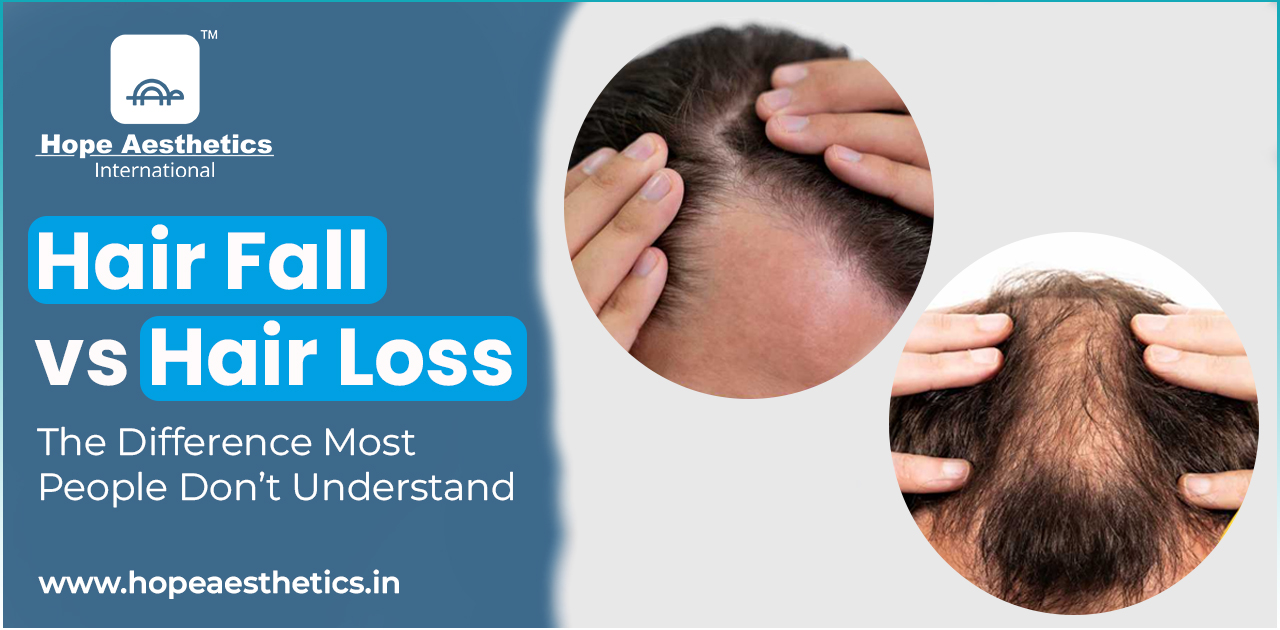
Common Signs of Hair Loss
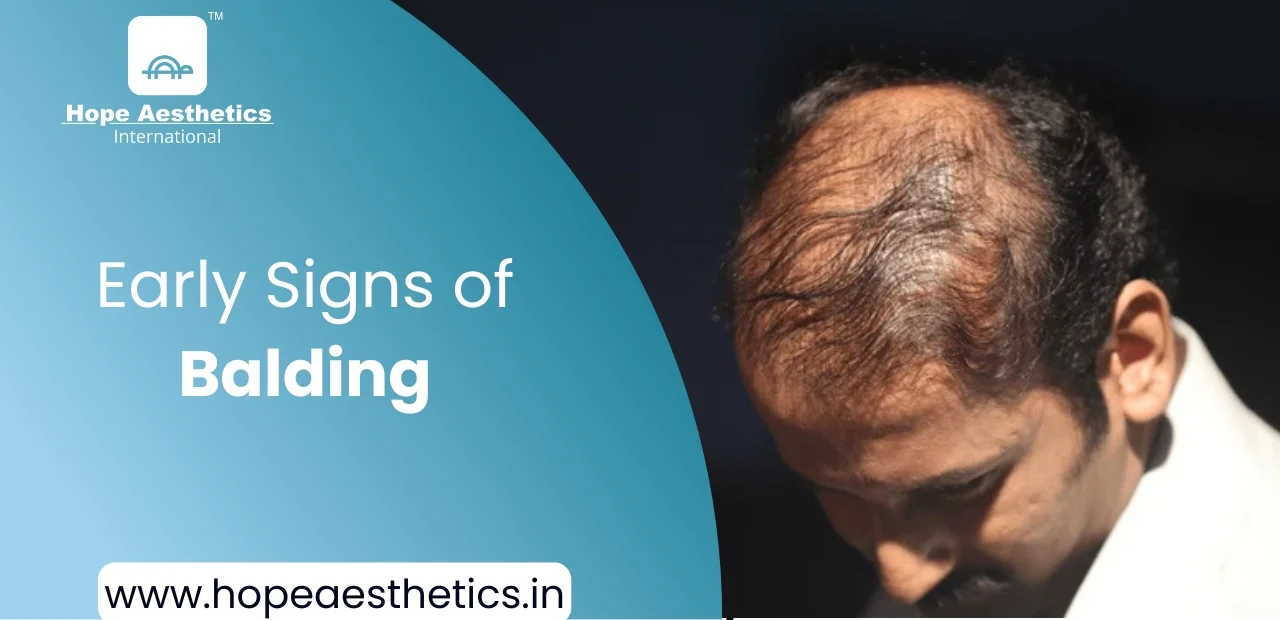
- Hairline slowly moving back
- Thinning on the crown (top of the head)
- Scalp becoming visible
- Hair becoming thinner every year
Hair loss usually gets worse over time if nothing is done.
Simple Way to Understand the Difference
| Situation | What It Usually Means |
| Hair on pillow, comb, or shower but hair still looks thick | Hair Fall |
| Hairline going back or scalp becoming visible | Hair Loss |
| Hair grows back after some months | Hair Fall |
| Hair gets thinner every year | Hair Loss |
What Can Be Done When Hair Loss Starts?
If hair follicles are still alive but weak, they can often be revived with the right treatments.
At Hope Aesthetics International, we use a structured hair restoration program called Folligenix.
This program focuses on strengthening weak follicles and stimulating new hair growth using advanced regenerative techniques.
1. Micro-Needling

Micro-needling is a technique where very tiny needles create micro-channels in the scalp.
This stimulates the body’s natural repair process and improves blood circulation around hair follicles.
Studies show that microneedling can significantly improve hair growth and enhance the effect of other hair treatments.
2. GFC Therapy (Growth Factor Concentrate)
GFC therapy uses your own blood.
From that blood, doctors extract powerful growth factors and inject them into areas where hair is thinning.
These growth factors help:
- Strengthen weak follicles
- Improve hair thickness
- Stimulate new hair growth
GFC is considered a more refined and concentrated regenerative therapy because it isolates pure growth factors that help repair tissues and stimulate hair follicles.
3. EXOS-GFC Therapy
EXOS-GFC is an advanced combination treatment.
It combines:
- Exosomes (powerful cellular messengers from regenerative cells)
- Growth Factor Concentrate (GFC)
Exosomes contain proteins and signaling molecules that help activate dormant hair follicles and improve scalp health.
When combined with GFC, the goal is to boost follicle repair and hair growth more effectively.
The Folligenix Approach
The Folligenix program combines:
- Micro-Needling
- GFC Therapy
- EXOS-GFC Regenerative Treatment
The goal is simple:
Reactivate weak follicles before they permanently stop producing hair.
Because once a follicle is completely dead, only a hair transplant can restore hair in that area.
The One Rule Most People Ignore
If you only see fallen hair, it may just be temporary hair fall.
But if you start seeing your scalp becoming visible, it usually means hair loss has already started.
And the earlier it is treated, the higher the chance of saving your hair.